On 17 May 2026, Scarborough College marks a remarkable milestone – 125 years since the school first opened its doors to pupils.
The College officially opened on 17 May 1901 under the leadership of Headmaster Percy Armstrong. Eager to begin welcoming pupils, Armstrong chose not to wait for the completion of the school buildings. Instead, lessons began in his own house, now known as the West Wing, while workmen continued construction elsewhere on site.
That first term, just seven boys formed the entire school community:
RW Stanners
JS Beck
WA Milton
CB Coulson
A Atkinson
AP Cooper
R Harland
As we reflect on the College’s history, we also remember the lives and experiences of those early pupils beyond their school days.
JS Beck, the College’s first boarding pupil, sadly died in Australia in 1909 after being thrown from a horse.
The impact of the First World War was also deeply felt. R Harland was killed in France in 1918 towards the end of the conflict, while AP Cooper lost an arm during the war.
Today, 125 years later, the College community has grown far beyond those original seven pupils. To mark the occasion, 125 Prep School pupils gathered on the cricket field to create the shape of “125” in a special commemorative photograph – a fitting tribute linking the College’s past and present generations.
Our thanks go to groundsman (and informal archivist) Mr Paul Swinger for researching and sharing this fascinating insight into the College’s earliest days.
To celebrate this special anniversary year, Scarborough College will also be launching Challenge125 next term. Pupils, staff and parents will be invited to take part by completing 125 acts that support society, mental health, charity or fitness. More details will be shared soon.
As a parent, you want your child to leave school confident, capable, and ready for whatever future they choose. In today’s world, that future is increasingly international, yet across the UK, modern foreign languages are quietly being pushed to the margins.
Recent reporting has shown that since plans to withdraw the EBacc were announced, many schools have already begun scaling back language provision – reducing lesson time, limiting options, and encouraging fewer pupils to continue languages at GCSE.
For parents, this raises an important question: if languages are declining nationally, where will my child gain the global skills they need?
At Scarborough College, the approach is very different.
From the earliest years, languages are part of everyday learning. French is taught from the age of 3 in Little Owls Pre-School, and pupils start learning both French and Spanish from Year 5. At GCSE, at least one language remains a core part of the curriculum. This is one of the many ways we prepare our students for a global future.
More Than Words
Languages are not just another subject. They shape how children think, communicate, and understand others. As Mrs Carine Marshall, Head of Modern Foreign Languages, explains: “Learning a language is about opening doors, both intellectually and culturally. It will also stand them in great stead in their future careers.”
From the earliest years, pupils at Scarborough College are immersed in language learning, building confidence and curiosity alongside academic skill.
The IB Difference
In the Sixth Form, the International Baccalaureate (IB) takes this further. Every student studies a broad range of subjects, including at least one language, ensuring they develop both depth and global awareness . With options including French, Spanish, German and even Mandarin, students engage with languages at a level that reflects real international relevance .
But what does that mean for your child?
It means they do more than memorise vocabulary, they learn how to think differently. As Mrs Marshall puts it, “When students understand another language, they begin to understand another way of thinking.” That mindset builds confidence, adaptability, and cultural awareness, which are all qualities universities and employers value.
Keeping Opportunities Open
Scarborough College’s commitment to being a global school reflects a clear belief: education should prepare students not just for exams, but for life. With small class sizes, individual support, and an international outlook, our students are challenged to succeed.
For parents, the decision is ultimately about opportunity. An education that values languages and global understanding keeps doors open – whether that means studying abroad, working internationally, or simply having the confidence to engage with a wider world.
We are proud to share the findings of our latest ISI inspection outcomes and our first feature in The Good Schools Guide – all neatly combined in the document below. We are delighted that these independent and well recognised perspectives affirm what we already know, that our family school is going above and beyond in all areas to create a quality education for all our pupils.
Both highlight what matters most: high-quality teaching, strong academic outcomes and a culture in which pupils are known, supported and encouraged to aim high. Alongside this, the College’s commitment to pastoral care and wellbeing ensures that every child can thrive.
What stands out is the balance – academic ambition matched with a breadth of opportunity beyond the classroom, from sport and the arts to outdoor education, all helping pupils grow in confidence and character.
We invite you to explore the full document to learn more about what makes Scarborough College such a distinctive place to learn and grow.
It has been a fabulous term for our students. From incredible university offers, excellent performing arts events and sporting success and spending time with pupils who are the kindest I have ever worked with.
One of the highlights recently was our staff pantomime. My own appearance as the Wicked Stepmother certainly added a different dimension to the occasion, but luckily it did not overshadow the remarkable talent of our colleagues. Congratulations and thank you to all the staff who took part, both on stage and behind the scenes, and to everyone who came along to support the event. It was a joyous opportunity to showcase the strength of the performing arts at Scarborough College while raising funds for our Lisvane Hall Redevelopment Project. We will share the total amount raised as soon as the final figures are in.
Next week promises to be another vibrant and exciting one. On Monday we will host a TEDx-style event, welcoming participation from another local independent school. It will be a fantastic opportunity for pupils to share ideas, develop their speaking skills and learn from one another. Parents are very welcome to attend the sessions if they would like to do so.
We are looking forward to the Year 7 production of Alice in Wonderland on 18 March. This is the first time we have staged a completely separate production for our youngest senior school pupils. A great deal of work has gone into preparing the performance and many of the pupils are understandably excited. For some, stepping onto the stage is well outside their comfort zone, but embracing such challenges is very much part of our Yorkshire Grit mentality. My thanks go to Ms Galway, Mrs Allport and the wider team for their dedication in bringing this production to life.
On Thursday 19 March we are delighted to welcome classical guitarist Wesley Hua for the second concert in our Lisvane Recital Programme. This is a fantastic series of performances that are open to the wider public, bringing both new and established artists to Scarborough across a range of musical genres. My thanks to our Director of Music, Mr Garfitt, for curating what is proving to be a wonderful programme.
Academically, our Year 13 pupils are entering the final stretch before their examinations after Easter. We are immensely proud of the dedication and commitment they have shown and know they are well prepared for the challenges ahead. Year 12 students are currently undertaking mock examinations as they begin preparing for their final year. Across the school, Headmaster’s Commendations continue to come in thick and fast, and it is always a pleasure to recognise the effort, curiosity and determination shown by our students.
Sport has also provided plenty to celebrate in recent weeks. Our Boys’ U19 Hockey team progressed to the next round of the ISHC following a 2–0 win over Yarm. The Girls’ U13 Netball team were crowned District Champions, while the Boys’ U13 Rugby side retained their title by winning the Terrington Sevens. Athletics continues to thrive and well done to each student for their spectacular performances at a recent national event.
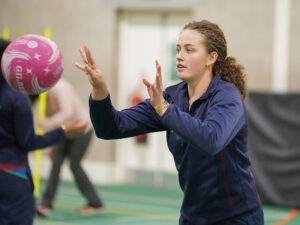
In addition, the SC Owls netball team secured Division 2 of the Scarborough Netball League with an unbeaten season under the guidance of Mrs Porter and Miss Stewart. Meanwhile, we are incredibly proud of Sixth Former Eboni, who has been named in the West Indies Women’s T20 squad to face Australia. She could be selected for the World Cup in England! On the national stage, Year 11 pupil Pip has also led England U16s Hockey team to great success as Captain. Our surfers continue to excel and congratulations to our incredible Equestrian team.
Please forgive me for not mentioning all successes, there is so much to say and I am incredibly proud of them all. Every child from Prep to Seniors knows my love of the outdoors. Children play outside during breaktime, lunchtime and EPs – team sports or otherwise so effectively, filling the fields with joy – this is the key triumph for me.
Thank you, as always, for your continued support of the school. I look forward to seeing many of you at the upcoming events and performances over the coming days. This is my 8th year here and I still feel incredibly lucky every day.
Scaffolding for Independence and Challenge at Scarborough College
Our second Tea & Teaching session built thoughtfully on our launch meeting, turning its focus to a crucial question for every classroom: How do we support learners effectively while building independence and long-term challenge?
This session was expertly led by English teacher Mike Anderson, who stepped up to guide colleagues through the principles and practicalities of effective scaffolding. His session combined clarity, research insight and classroom wisdom — modelling the very strategies we were there to explore.
From Support to Self-Sufficiency
Scaffolding is sometimes misunderstood as simply “breaking work down” or simply providing writing frames. Instead, we explored it as something much more dynamic:
Providing temporary structures that enable pupils to access ambitious content
Maintaining high expectations while offering guided support
Gradually removing scaffolds so that independence and confidence grow over time
Colleagues discussed how scaffolding is not about making tasks easier, but about making thinking visible and manageable, especially when introducing new knowledge or complex processes.
Cross-Department Collaboration
One of the strengths of Tea & Teaching continues to be its cross-curricular nature. This session saw thoughtful contributions from colleagues in:
English
Maths
Modern Foreign Languages
Physics
The richness of discussion came from seeing how scaffolding operates differently — yet shares common principles — across subjects. Whether modelling analytical paragraphs in English, structuring problem-solving in Maths, guiding extended responses in MFL, or breaking down multi-step reasoning in Physics, colleagues shared strategies that emphasised clarity, sequencing and gradual release of responsibility.
It was particularly powerful to reflect on how scaffolding must evolve over time: what is appropriate support in Year 7 would look very different in Year 11. The ultimate aim is always the same — independent, resilient learners capable of tackling complex challenges without reliance on prompts or templates.
Practical Takeaways
As with our first session on adaptive teaching, the emphasis remained firmly on practical classroom application. Staff left with concrete ideas to trial immediately, including:
Live modelling and “thinking aloud”
Structured questioning sequences
Partial worked examples
Carefully designed writing frames with planned fade-out
Retrieval tasks that reinforce prior scaffolds
The discussion reinforced a key principle: scaffolding is most effective when it is intentional, temporary and ambitious.
A sincere thank you to Mike Anderson for leading such a thoughtful and engaging session, and to all colleagues who contributed so openly. The professional generosity and shared commitment to excellence are becoming defining features of this growing community, and I look forward to more colleagues stepping up to lead sessions as we move forward.
We look forward to seeing how these ideas develop in classrooms across Scarborough College — and to continuing the conversation at our next Tea & Teaching session.
Supporting our Upper Sixth on their educational journey
As our Year 13 students approach the final stretch of their school careers, attention turns to what comes next. Whether that next step is university, an apprenticeship or the start of a professional qualification, navigating post-18 pathways can feel highly pressured for both students and parents. At Scarborough College, we place a strong emphasis on structured support and early preparation, ensuring that every student is well equipped to make confident and informed decisions about their future.
This year’s IB Diploma Programme mock examinations have provided an encouraging snapshot of what that preparation can achieve. Students produced an excellent set of results, reflecting both their hard work and the accuracy of the grade predictions made back in October. These predictions are crucial: they not only underpin university applications, but also allow students to gauge how close they are to meeting the conditions of their offers, helping them to focus in the months ahead.
Strength of University Offers
The strength of those applications is already evident as offers arrive from a wide range of highly regarded universities and competitive courses. Our students hoping to study Veterinary Medicine have secured offers from the Royal Veterinary College and the University of Nottingham. All students applying for Medicine have received interview invitations, with universities such as Exeter and Southampton recognising their potential. Particularly noteworthy is a student applying for Physiotherapy – an extremely competitive course – who has been invited to interview while studying in her second language, a significant personal and academic achievement.
Russell Group universities continue to be a popular destination, with institutions including Durham, Warwick, Birmingham, York, Leeds, Sheffield and Manchester recognising the work of our students. Many of these offers have been made to international students, several of whom are studying the IB Diploma in their second or even third language. Degree choices are wide-ranging, from law, economics, finance, maths and sports science, to more specialist routes such as architecture, interior design and sports journalism.
Career Guidance is Key
Behind these successes lies a carefully coordinated programme of guidance and support, led by the Sixth Form team and, in particular, our Careers Adviser, Mrs Anna Lowe. Early identification of students aiming for highly competitive courses allows tailored support to begin well in advance. Specialist societies – including the Veterinary, Medical and Dentistry Society – bring in professional guest speakers, provide insight into career pathways and offer valuable mock interview practice.
Support begins early in Year 12 for those considering Oxbridge, with webinars, alumni contact, and a dedicated Oxbridge event each March. Our links with specific Oxford & Cambridge colleges even allow students to experience residential visits ahead of application, helping them to make well-informed choices. External speakers, such as The University Guys, add further perspective, particularly for students considering international study.
Alternative Paths to Success
While university remains the preferred route for many, it is not the only pathway we celebrate. Apprenticeships and professional qualifications are discussed openly and positively, with past students progressing into roles with companies such as Volkswagen or entering accounting and finance before pursuing professional accreditation.
We are immensely proud of the offers currently being received. It is a testament to the determination of our students and the depth of support around them. An additional advantage of the IB Diploma Programme is its earlier examination and results timetable, allowing students to approach the summer with reassurance, clarity and, in many cases, their future firmly secured.
This article was first featured in the College’s Owl Magazine (February 2026).
The Duke of Edinburgh is more than just an expedition – volunteering is a key part of the scheme
When people hear “Duke of Edinburgh’s Award”, the image that most readily comes to mind is a group of teenagers shouldering rucksacks, pitching tents and navigating muddy footpaths.
While the expedition is undoubtedly a memorable part of the experience, it is only one element of a far broader programme. At its heart, the Duke of Edinburgh’s Award (DofE) is about developing character, commitment and compassion – qualities that extend well beyond the campsite.
Established in the UK in 1956 and now recognised internationally, the DofE encourages young people to challenge themselves across four key areas: volunteering, physical activity, skills development and expedition, with an additional residential section at Gold level. It is the volunteering strand, however, that often has the most profound and lasting impact. By giving their time to support others, students learn responsibility, empathy and the value of contributing to their communities – lessons that resonate far into adult life.
At Scarborough College, the Duke of Edinburgh’s Award is a thriving and integral part of school life, with strong participation at Bronze, Silver and Gold levels. Students volunteer in a wide range of settings, from supporting younger pupils and assisting in sports or creative activities, to working with local charities and community organisations. These experiences not only benefit others, but also help students to discover new interests, build confidence and develop a sense of purpose.
Volunteering within the Duke of Edinburgh’s Award gives students the opportunity to turn interests into action, while developing confidence, resilience and a sense of responsibility to others. As the students’ own words show, its value lies as much in personal growth as in the positive impact made on the wider community.
Sharing Your Skills
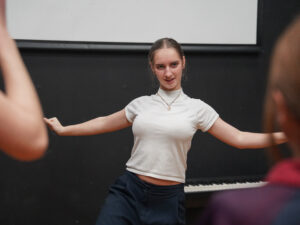
For Ahafiia, volunteering was a chance to give something back to the school through dance – an activity she has loved “since I was four years old”. She wanted to create “a free space for anyone to express themselves in a way that they want to”, emphasising that “anyone can dance no matter the experience”.
Encouraging others to take part was part of the challenge, particularly for students lacking confidence. As she reassured them, “nobody here is a professional… no one’s going to remember what happened five minutes after it finishes.” Through this process, she developed leadership skills and believes that dance club has added to the school’s already thriving performing arts programme.
Acts of Charity
Layla’s volunteering with the RNLI pushed her into an unfamiliar but highly rewarding role. She recalls how “showing people around the boat is really interesting”, admitting that “before I started working there, I didn’t really know much about it”. Learning to explain the lifeboat’s work became “a real challenge and test of my knowledge”, but one that built confidence and awareness of an organisation that plays a vital role in coastal communities.
Chloe’s experience at Filey Cat Rescue highlights adaptability and independence. While she initially sorted donated items, she recalls a moment of challenge when she was asked to work at the counter helping customers and running sales, something she had not done previously. As she puts it, “you just have to learn on the job”, a great learning experience that strengthened her confidence and practical skills for the future.
Becoming a Role Model
Many of our DoE participants spend their volunteering time in the Prep School – offering after school clubs or assisting children with learning.
For Juno, volunteering with younger children brought a strong emotional reward. Helping a child complete a puzzle and “seeing their face light up” made her realise how much small encouragement can help someone. She also learned how to overcome challenges, like when some of the children got upset or distracted during activities – staying calm and listening really helped and showed her that she can handle tricky situations better than expected.
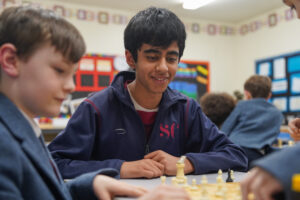
Will (Year 9) decided to volunteer in the Prep School as he himself benefitted from Senior School volunteers – he joined the Prep in Year 2. He learned a lot and so “wanted to give back to the Prep School and provide others with a similar experience”. He chose to teach chess, alongside fellow student Abeer, because it was “a good one to teach and some people may not have much experience in chess” meaning that he could share his experience of his own hobby.
We know that volunteering through the Duke of Edinburgh award is about far more than completing hours. It encourages students to step forward, support others and discover abilities they did not know they had, with benefits that extend well beyond the Award itself.
This article was first produced for the College’s Owl Magazine in February 2026.
Welcoming four students from St Peter’s, Cambridge, New Zealand
This term, Scarborough College has been delighted to welcome four students from St Peter’s School in Cambridge, New Zealand – Jack (15), Jonny (14), Katie (17) and Kenzie (15) – as part of our developing international exchange programme. The partnership is built on a reciprocal model: our students travel overseas to experience life and sport in New Zealand and South Africa, and in return we host pupils from those schools here in Scarborough. Plans are already underway to extend the programme to Australia and parts of Europe, further broadening its global reach.
While the current focus of the St Peter’s exchange is sport, the experience is deliberately holistic. Students spend a full term immersed in school life, living within our boarding community, attending academic lessons and representing the College in competitive fixtures. The initiative is being led by Mr Sam Thurgood, Deputy Head (Pastoral), with a clear vision: to create meaningful, character-building international opportunities that develop independence, resilience and cultural understanding. In the coming years, the programme will expand beyond sport to include a wider range of academic subjects.
We spoke with our current New Zealand exchangees to get their thoughts on the programme and what they have learned – about their sport and about themselves.
Q: What have been your first impressions of Scarborough College?
Kenzie: “When I first came in, everyone swarmed me – in a good way! They were all so lovely and polite, asking what classes I had and telling me to sit with them. It was just really nice to have that welcome experience.”
Jack: “Boarding is completely different. Here you’re rooming with one or two other people and it’s such a good way of making friends. From the first day, we got to know everyone.”
Katie: “I’m in the mixed boarding house and that’s really cool. We don’t do that in New Zealand – we’re quite separate – so it’s been a great experience.”
Q: What have you particularly enjoyed or learned from training and playing alongside Scarborough College students?
Jonny: “I’ve enjoyed having extra rugby sessions and games every Wednesday and Sunday. You learn heaps here – there’s more training and you can even play club rugby during term.”
Katie: “The hockey girls are really positive. When we do fitness, everyone’s keen and ready to work hard. It’s a different style of training, and I really like that.”
Kenzie: “You get a different playing style anywhere you go. It’s so cool to learn something new that I can take back home and use in my team.”
Jack: “All the teams train together sometimes, so younger players get to work with the more experienced ones. They’re always willing to help you out.“
Q: Alongside sport, you have been attending lessons while you are here. How have you found the UK classroom experience, and what similarities or differences have stood out to you?
Kenzie: “I was in class doing my own work and the teacher asked me if I wanted some help with it. He also offered me some resources that they have to help with further learning. I am a person that asks a lot of questions. So it was good that I got those resources to boost my learning as well.”
Katie: “All the teachers are really lovely and genuinely enthusiastic about what they’re doing. I feel like a part of the class even though I am doing my own work from home. So we try to match up the classes to be somewhat similar, so the teachers can still help us. It can be challenging when I’m not in the classroom with my exact teacher. But it’s a good challenge. I like it.”
Q: What will you take away from this exchange, academically, athletically and culturally, and how do you think the experience will influence you when you return to New Zealand?
Jonny: I’m pretty sure it’s going to improve my rugby lots. It’s a different playing style here. It’s going to feed my game for the better. Over here, more training, so you learn more. With a really good coach, like Mr Foden, you just learn heaps.
Jack: First and foremost, we came here for rugby as this was was a sports exchange. I think my main goal was to make as many friends as I can and enjoy it. I’ve been doing that so far because I’ve met heaps of people who have all been super nice. We went to the Burn’s Night celebration – it was different! When we first got told about it, I didn’t know what to expect. But it was a really cool experience. I tried a little bit of haggis, but it’s not my thing!
Q: What’s the one piece of advice you would give to someone considering an exchange to Scarborough College?
Jack: Just make the most of it and enjoy your time here – make lots of friends. Make sure you pack a lot of warm clothes because it’s freezing here!
Jonny: You don’t need to pack shorts, you’re not going to wear them. Just pack jeans and track pants, that’s all you’re going to wear. And you’re going to miss the sun, but it’s good.
Katie: Just throw yourself into all the opportunities to create a really good experience. Also show everyone a bit of how you are at home or your culture, because they will find it really interesting. And then just make sure that as well as making lots of new friends here, you’re staying connected to people back home as well, because that’s really important.
Kenzie: Yes, just throw yourself into it. It’s been about a month for us now and the days are just calming down. I think it’s coming too soon that we’re going home. I love it here. Get out there, make friends, have a lot of fun. It’s a short time.
This article was first produced for the College’s Owl Magazine in February 2026.
A New Chapter in Professional Learning at Scarborough College
By Alfonso Iannone, Deputy Head (Teaching & Learning) and Head of English
Just before our half-term break, I was thrilled to launch our new staff-led Teaching & Learning Interest Group – Tea & Teaching – and what a fantastic start it was.
Our first session focused on adaptive teaching, bringing together colleagues from various departments in the Senior School to reflect on classroom realities and share practical strategies to meet the needs of all learners. It was inspiring to see teachers from different subjects and phases engaging in thoughtful professional dialogue, united by a shared commitment to excellence in teaching.
What made the session particularly valuable was its balance between research-informed thinking and concrete classroom application. Drawing on current educational research, colleagues explored what adaptive teaching looks like in practice: how we check for understanding, adjust explanations in the moment, scaffold thinking without lowering expectations, and ensure that challenge remains high for every pupil.
This blend of evidence and experience is exactly what Tea & Teaching is designed to foster — a professional space where ideas are not only discussed, but tested, refined and translated into meaningful classroom impact.
A Rich Range of Learning Topics
This is just the beginning. We have a further nine sessions planned, with topics that build thoughtfully on one another, including:
Adaptive Teaching: How do we respond to learners’ needs in real time?
Scaffolding: How do we support learning without reducing challenge?
Cognitive Load & Dual Coding: How can lesson design support working memory?
Retrieval Practice: How do we strengthen long-term learning?
Metacognition: How do we develop independent learners?
Formative Assessment & Feedback: How does feedback improve learning?
Questioning & Dialogue: How do questions deepen thinking?
Modelling & Worked Examples: How do we make expert thinking visible?
Literacy Across the Curriculum: How do we develop disciplinary language?
Evidence-Informed Culture: How do we sustain improvement over time?
Colleagues have already begun suggesting further themes, reflecting the enthusiasm and shared ownership that characterise this initiative. Admittedly, as an English specialist, I was baiting the Maths department into requesting Numeracy Across the Curriculum as a further topic and they didn’t disappoint! Other requests came in for sessions on the purposeful use of various technologies in the classroom, so this clearly has piqued the interest of colleagues.
Looking Ahead: Scaffolding for Independence
Our next session will focus on scaffolding by examining how we can provide the right level of support at the right time, while gradually removing it to build confidence, independence and resilience. As with our first session, the emphasis will be on practical strategies that teachers can implement immediately.
A Note of Thanks
A huge thank you to everyone who contributed to such a positive and thoughtful launch. The energy in the room was a powerful reminder of the strength of our professional community.
We look forward to seeing Tea & Teaching continue to grow as a vibrant forum for collaboration, reflection and best practice at Scarborough College.
It has once again been a very productive fortnight. Our IB and GCSE mock examinations have gone very well, and I would like to congratulate our students for their results. Mocks are an essential part of the examination journey, helping students to understand both the academic demands and the practical realities of formal assessments. A great deal of useful feedback will now follow, and I look forward to the Year 11 Parents’ Evening next week. I have also been delighted to see a high number of Headmaster’s Commendations awarded recently, reflecting consistent effort and achievement across the school.
Academically, we continue to have much to celebrate. Our Upper Sixth students are receiving excellent university offers, and I am immensely proud of their successes and ambition. In sport, our teams have enjoyed a particularly strong period. Netball continues to go from strength to strength under the dynamic team of Miss Steward and Mrs Porter. The Squash team have progressed to the next round of the National Plate, and we are very much looking forward to the Rugby 7s tournament in February.
In the arts, excitement is building ahead of next week’s production of Animal Farm. There is an enormous amount of hard work taking place in Lisvane, with stunning props being created alongside some excellent performances from the cast. My thanks go to Mr Weatherhill, Mrs Golder, Mr Garfitt and Mr Riley for their commitment and creativity, as well as to the pupils themselves. I am looking forward to seeing their efforts brought to life on stage.
Looking ahead, our productions will soon be staged in a very different setting. Theatre Phase 1 is planned to begin this summer, with more details to follow shortly. If you would like to be part of this lasting legacy, our “Take a Seat” campaign remains open, offering the opportunity to have your name permanently featured in the theatre. Fundraising continues in the meantime, with tickets now on sale for the Staff Pantomime. Rehearsals are well underway, although I am not looking forward to the costume fitting as I have a small role as the Wicked Stepmother. Thankfully there are staff with some acting ability – it promises to be a joyous pantomime with many laughs.